

Last Updated on May 21, 2025 by Amber T
The early 2000s were a strange time for the horror genre. In between the heyday of the giallo-indebted murder-mystery slashers of the late '90s (Scream or I Know What You Did Last Summer) and the rise of grisly torture porn in the '00s (Saw or Hostel) came a brief period in which the sensibilities of each respective subgenre seemed to converge into a single film: 2000's Final Destination.
The film, directed by James Wong, would go on to spawn a franchise that would mutate alongside the horror genre as a whole in the years to come. In the twenty-five years since the first film's release, it has come to be classified by terms like “Rube Golderberg-ian” and “gory.” But what's truly unique about the Final Destination films and a huge part of why they have continued to stand the test of time is that for as quintessentially early 2000s as the films are, the storytelling and visual craft on display is far more rooted in classical suspense techniques.
The iconic master of suspense, Alfred Hitchcock, once famously described the difference between shock and suspense as the difference between “fifteen seconds” of surprise and “fifteen minutes” of agony. As he described it, the essential difference between the two revolves entirely around information.
To paraphrase the master's example, if you have two characters sitting at a table, talking for fifteen minutes, and then suddenly a bomb goes off out of nowhere, it can be quite shocking. However, if the film shows the audience that there is a bomb under that table before the characters ever sit down, then the entire conversation will be achingly suspenseful to witness, solely because the audience has information that the characters do not.

Hitchcock utilized these methods to create taut, tense, and nerve-shredding sequences in his own films. There is perhaps no more evident example of this technique than in his 1948 film Rope, which is a feature-length exercise in seeing just how far he can stretch suspense and gradually tighten the screws on the audience.
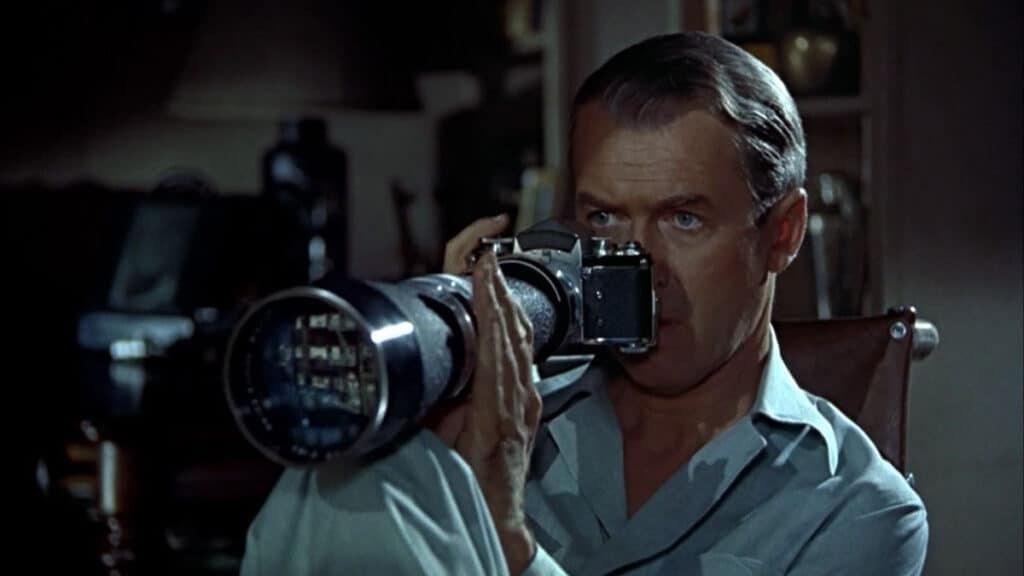
One of Hitchcock's trademark approaches to heightening the stakes of a suspense sequence was to clue a single character in on what the audience already knows. In this way, the character becomes something of a surrogate for the audience, desperately attempting to beat the clock and resolve the issue at hand before disaster strikes. The central setpiece of Rear Window, in which James Stewart's character watches helplessly from across the way as Grace Kelly's character is unknowingly being closed in on by the killer, is a pristine example of just how effective this can be.
The original Final Destination is overtly indebted to Hitchcock, not just in form but in content as well. Seann William Scott's character in the film is literally named “Billy Hitchcock.” However, to a larger extent, the central concept of the work allows the film to have its cake and eat it, too, when it comes to shock and suspense.
When Devon Sawa's character, Alex Browning, first sits down on flight 180, anxious and nervous, the audience is apprehensive but uncertain. Thus, when the plane explodes in a violent, gruesome fashion shortly after takeoff, it's a blast of unadulterated shock. However, the film then plays its hand: the explosion was a prescient premonition that Browning had of what is shortly about to happen. Here, it has been communicated to both the audience and Browning exactly what will happen, allowing the film to milk the character's remaining minutes on the plane for maximum suspense.

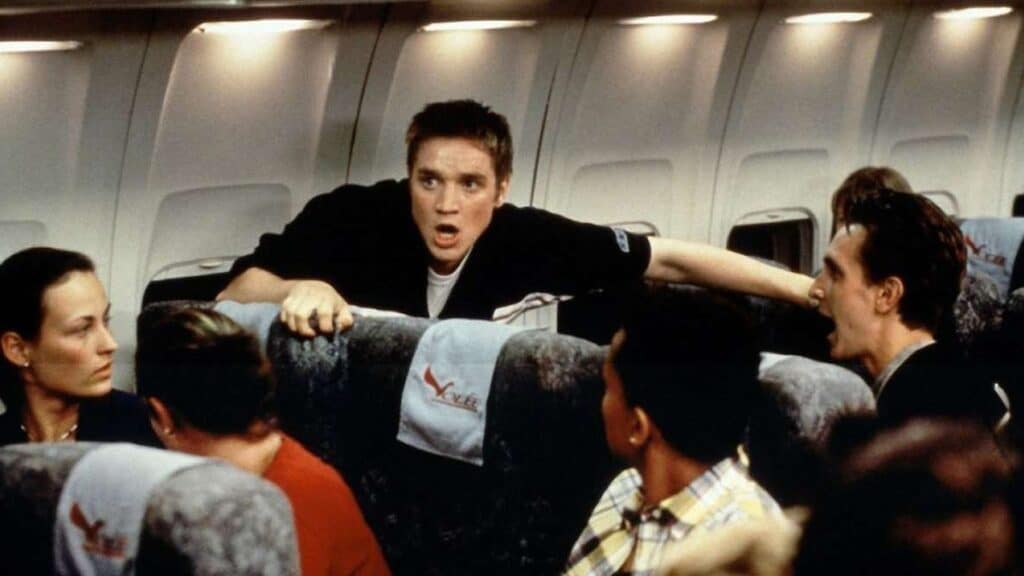
From there, as the film's story progresses and it becomes evident that Death is coming for each of the survivors, Browning becomes a Hitchcock protagonist through and through. He is trapped in a perpetual cycle of being Jimmy Stewart from that scene in Rear Window, racing against the clock and the powers that be in an attempt to stop these horrible deaths from happening.
However, if the first Final Destination set the stage for this blended approach horror methodology, then David R. Ellis' Final Destination 2 brought the house down with it. The difference between these first two installments is akin to that of the differences between Friday the 13th and Friday the 13th Part II; gone is any sense of shame regarding the go-for-broke machinations of the high-concept plotting and in its place is an ambition to take everything up several notches in intensity.
Indeed, Final Destination 2 takes the bones of what works about the first film and amplifies them to a gnarly degree, and nowhere is that more apparent than in its multi-tiered approach to suspense. Ingeniously, Final Destination 2 uses its opening credits to essentially catch everyone up to speed. Even audiences who hadn't seen the first film were overtly familiar with the central hook of the franchise by the time these opening credits were through, and the film very much uses that to its advantage.

It knows that the audience is expecting a large-scale disaster sequence to kick off the film because of the precedent set by the first film, and it milks this to a ludicrously sinister degree. Fittingly, while Final Destination 2 doesn't have a character named Hitchcock, it does have one named Carpenter, and the film feels as if it pulls more directly from John Carpenter's take on suspense.
In films like Halloween, The Fog, and especially The Thing, Carpenter demonstrated his own mastery of suspense-building cinematic techniques through his ability to build up multiple threads of suspense and generate shock out of which ones get paid off in which order.
For example, the iconic defibrillation sequence in The Thing sees Carpenter having already set up this thread of Norris having a heart attack and then pivoting to building suspense via a split-diopter shot, revealing that Clark has a scalpel and is preparing to attack Macready.
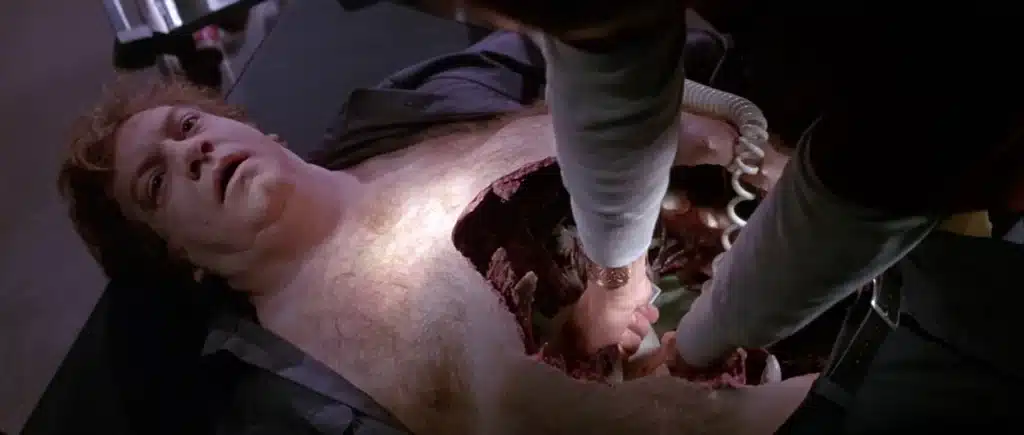
However, as the tension builds around Clark and Macready in the foreground of the scene, Norris' chest suddenly bursts open as Copper attempts to defibrillate him. It's an ingenious technique that works like a magic trick: pulling the audience's attention to one side as the real threat appears on the other side.
The setting up of Final Destination 2's car crash sequence sees David R. Ellis replicating this effect, only with about a dozen different threads all being juggled simultaneously. The audience knows an accident is coming, and the film tells us outright. But every car that passes by the camera seems to be a potential instigator of it, from the cop whose coffee cup is teetering on the edge to the speeding motorcyclist to the car that is leaking transmission fluid.
This winds up paying off tenfold, as these details are not only used to build suspense in the lead-up to the crash but are also paid off in quick succession within the crash itself to make it feel all the more brutally impactful.
The rest of the film mirrors this heightened approach, as it mines the elaborately staged setpieces for far more conflict than the first film did. Not only are the deaths themselves far more elaborate, properly earning the “Rube Goldberg-ian” moniker, but the characters are able to fight back against them far more emphatically, making them all the more thrilling and tragic in equal measure.
Just before Alex Browning has his vision of the plane crash in the first Final Destination, there's a very telling exchange between him and his best friend, Tod. Alex is nervous about flying, but as they pass both a pregnant woman and a disabled person, Tod reassures him that “It'd be a fucked up God to take down this plane.”
Just as the protagonist at the center of a suspense-driven horror story is a surrogate for the audience, the impending peril itself is a surrogate for the filmmaker. Here, the filmmaker is god, and Tod might as well be overtly speaking to the writers and directors themselves. In this way, the Final Destination movies are uniquely suited to tackling not only the narrative idea of suspense but the technique itself on a larger metatextual level.
The protagonists at the center of these stories, who receive a vision early on and then continue to get clues as to who will be in danger next for the remainder of the story, are able to see through the membrane of the film itself, able to anticipate the filmmaker's next intent and attempt to communicate to others within the story. Or, as Hitchcock more eloquently put it, “In feature films, the director is God.”
As Final Destination: Bloodlines hits theaters May 16th, it's worth remembering that the Final Destination franchise is far more than it's often given credit for. While a viewing of the distinctly '00s aesthetics of the franchise's earlier installments doesn't feel quite complete today without a VHS player to boot, the storytelling and filmmaking craft on display throughout these films is far more classically indebted, adept, and heady than many give it credit for.
