
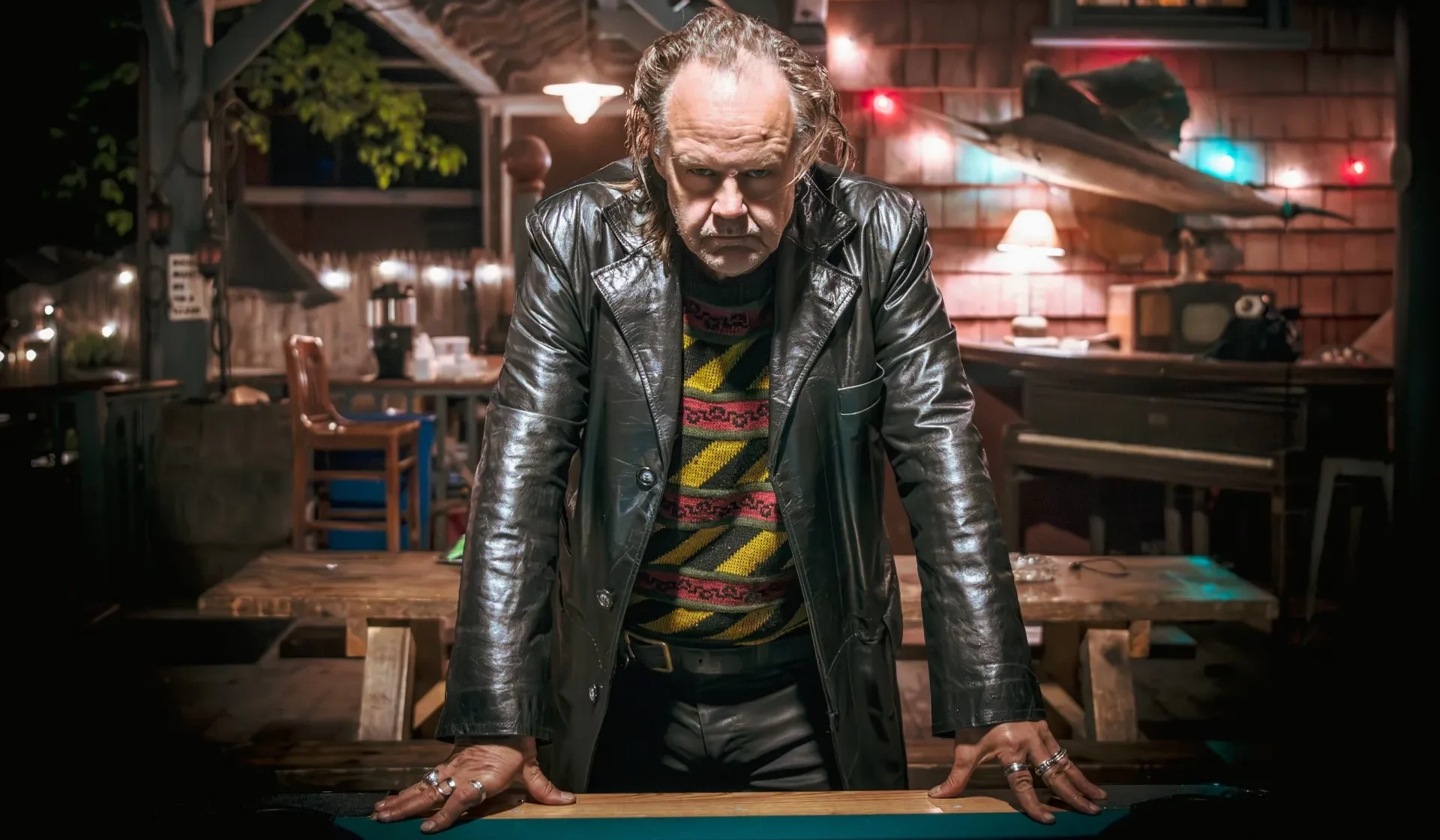
It’s no exaggeration to say that Larry Fessenden is one of the most important independent filmmakers of the last forty years. His microbudget horror films like Habit or Wendigo have inspired countless filmmakers to pick up a camera and go. More than that, his Glass Eyes Pix production arm has kick-started the careers of many of your favorite filmmakers. From Ti West to Jenn Wexler, so many names populating the genre in 2026 found their way in through Fessenden. Even Kelly Reichardt, a filmmaker as far removed from horror as it gets, has worked with him on many a project. Larry even starred in her first feature, River of Grass.
Like any great artist, Fessenden has always been a filmmaker with a lot to say. Everything from climate change to capitalism to the military-industrial complex, it’s all been filtered through his haunted house of a filmography. In his latest, Trauma, or Monsters All, Fessenden brings together characters from across his work for a delightful, melancholic and strange Monster Mash.
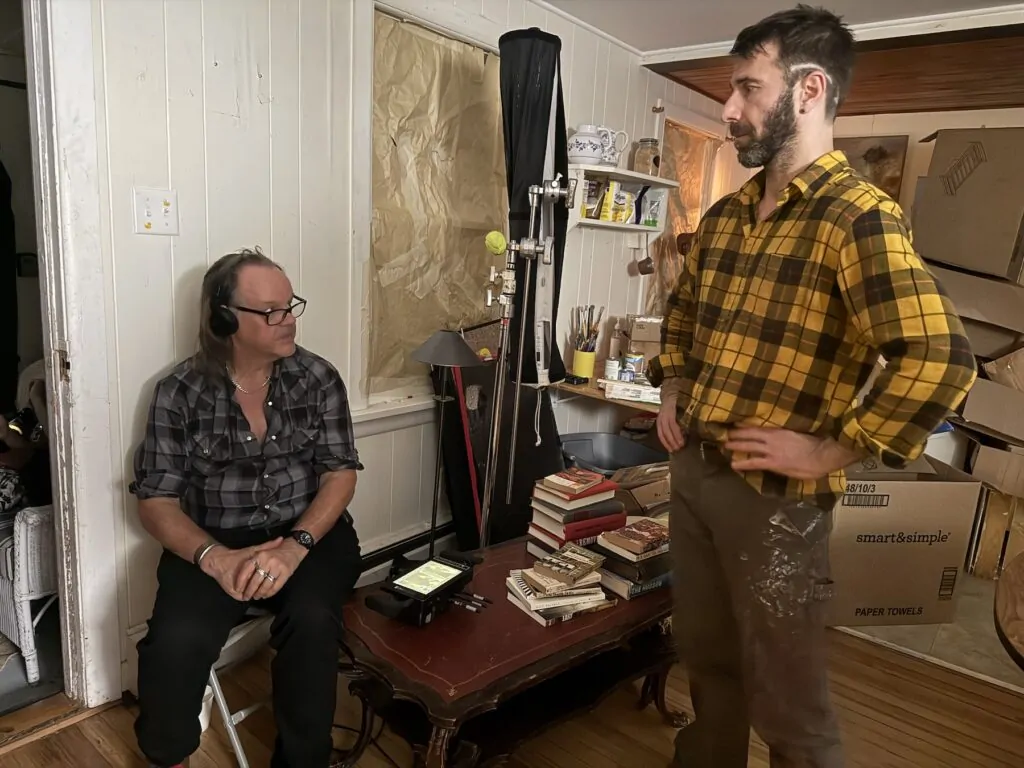
Picking up where Blackout left off, that film’s Wolfman (Alex Hurt) is hiding out in upstate New York. Shacked up with Depraved’s Frankenstein, Adam (Alex Breaux), the two make the most of their meager existence, hoping to avoid public scrutiny and live out their days in quiet anonymity. This all gets thrown into a loop when Cassandra (Laëtitia Hollard), a librarian working on a book about George Washington Carver, begins probing the “monsters” around her. Writing an article exposing the two and the small town’s sins with them, she sets in motion an unraveling of secrets and lies that threatens to expose this community to outside interests, including one: Sam, the vampire (Fessenden himself) from Habit.

Zeroing in on racial discrimination, questions of identity and small-town malaise, Fessenden maps being othered by society onto his cadre of monsters. The result is a somber, albeit often very funny and surprisingly lovely ode to the differences that make us special. Often an angry filmmaker, don’t worry, that’s all still here; Fessenden’s fourth “Monsterverse” outing finds a sweet throughline that asks for a little more open-mindedness as the world continues its tilt into hell.
As Trauma hits theaters, I sat down for a long, spirited discussion with Larry all about the film, Glass Eye Pix’ mission statement, his alleged retirement from filmmaking, and so much more.
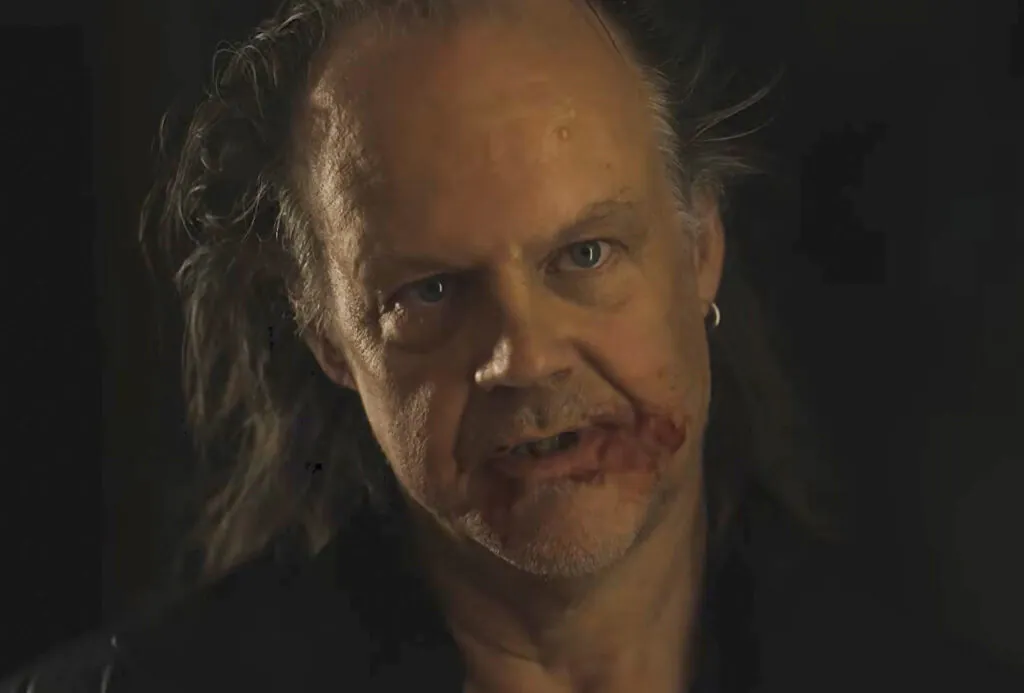
Right before we started recording, you were talking to me about getting other filmmakers’ movies off the ground. I think that’s a perfect place to start, with IFC Center currently screening its Glass Eye Pix retrospective. They’re not just showing your movies, but ones you’ve produced. I don’t think enough people realize, but you’re a major figure in the careers of Ti West, Jenn Wexler, Jim Mickle, and Kelly Reichardt, just to name a few. American independent cinema looks very different without you. Tell me about Glass Eye, and what it means to you to support other filmmakers.
I think it's just in my nature, and also, look, you benefit by helping others. I wish that message would get out more; it might lead to a better society. The fact is, I have a certain vision, but I love movies of all stripes, and I don't feel I could make them all. Even in the horror genre, there are some more pulpy filmmakers than I am, and I celebrate that. I really like movies, and I like encouraging people to find their own individual voice. That's actually the slogan of Glass Eye Pix: supporting individual voices in the arts. So it is kind of an overall agenda to, in a very small way, better society. The idea is that we all get along and communicate. Then the work itself, I'm drawn to people who are not leaning in fully to genre, but finding the humanity in their stories, especially in genre, because who doesn't like a good movie?
I always say not a film, but a movie. I have great empathy for artists trying to pursue a vision, and if I’ve been able to help them, I’m happy about that. I'm called a producer, but I'm really a wrangler and a cheerleader. Ti West and Kelly Reichardt have a very similar approach to film, especially in the early years, with a strong focus on attention to detail and observation. From then, obviously, their agendas may take different roads. Ti goes for fear and dread, and Kelly for something else, more ephemeral.
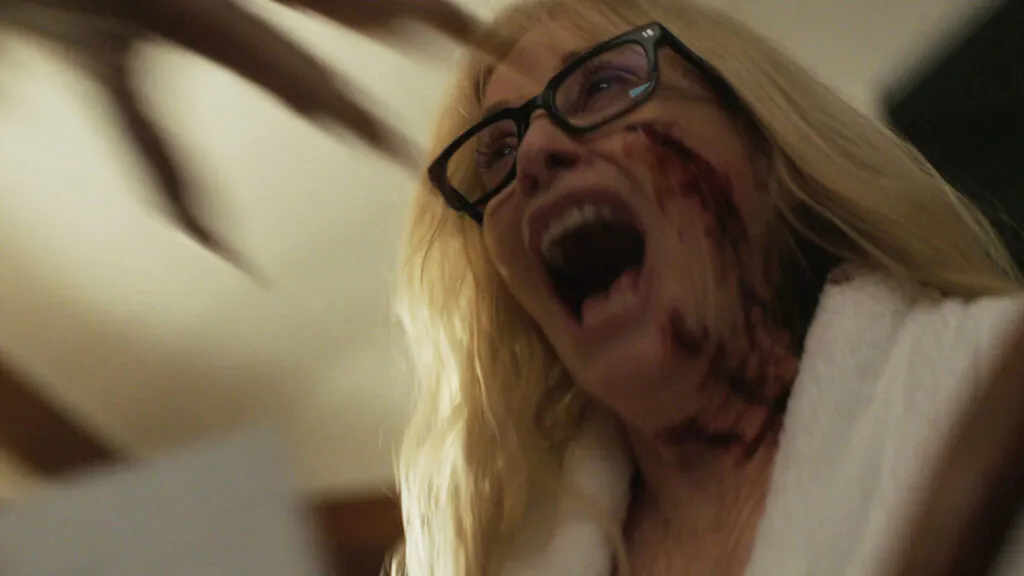
Being a wrangler, is that what keeps you coming back and collaborating with the same folks? I mean, the new one is full of Larry Legends, if you will. Even in the smallest of cameos, you have folks like Barbara Crampton, Toby Poser, and Emily Bennett popping up. I’m sure familiar faces are necessary when making an indie film, but what keeps you bringing everyone back?
I've tried my whole career to break into Hollywood, as one does because that's where the money is. There is a joy in getting the support of an actual studio, where you feel you'll have access to more resources. The closest I came was remaking El Orfanato, The Orphanage, which Guillermo del Toro produced. It's a wonderful movie, but they wanted to bring it to America and do it in English, and I was tapped to do that. So in that journey, I not only worked with Guillermo, which was very exciting and fun. We were like-minded, we found. But in the process of building it, I also met producers with long histories. One guy had worked on Marathon Man and had stories to tell. I met production designers, costume people of real note.
You realize this is a fascinating industry with real talent, and people who have succeeded are fun to work with. When I lost that gig, there was a sense that I had rebelled because I'm an indie filmmaker, but in fact, I got fired because they couldn't cast it. They felt I didn't have enough juice to get the level of talent to be in the movie. I had no bitterness about it all. I was, of course, disappointed, but I'm just saying I love the process. Most of my heroes are wildly successful, like Hitchcock, Scorsese, Polanski, P.T. Anderson, and other great filmmakers. I was enamored with PTA’s last one. Your real question was about community, and I just like working with these people. Also, the practical truth is, Trauma was because I wanted to bring back the same faces to tell that story and really stay in the zone.
I couldn't have made a sequel by recasting. That would have been even more preposterous because it would've implied that people care about my story way too much. To actually see the same people showing up and see how they've changed in some cases — I mean, my character is 30 years older- but also just to see those characters go forward in their story, I thought was really a fun challenge. As you say, I've worked with Barbara on many things. We also do radio plays and other things, and I love going back to the same people. It's in the spirit of having a troupe. I mean, Monty Python did it. You watch a Cagney movie; there are a lot of the same faces, Pat O'Brien and so on. Hitchcock worked with Jimmy Stewart, many times, and Cary Grant too. De Niro and Scorsese, the list goes on. There's that tradition of getting to know each other's rhythms. I've played in a band since 1979 with the same dude. I don't know if he's enjoying the experience, but I am [laughs]
I value collaboration and loyalty. These are things I think about in the creative endeavor. I also think about how it reflects the ideals of a good society: cooperation and continuity.
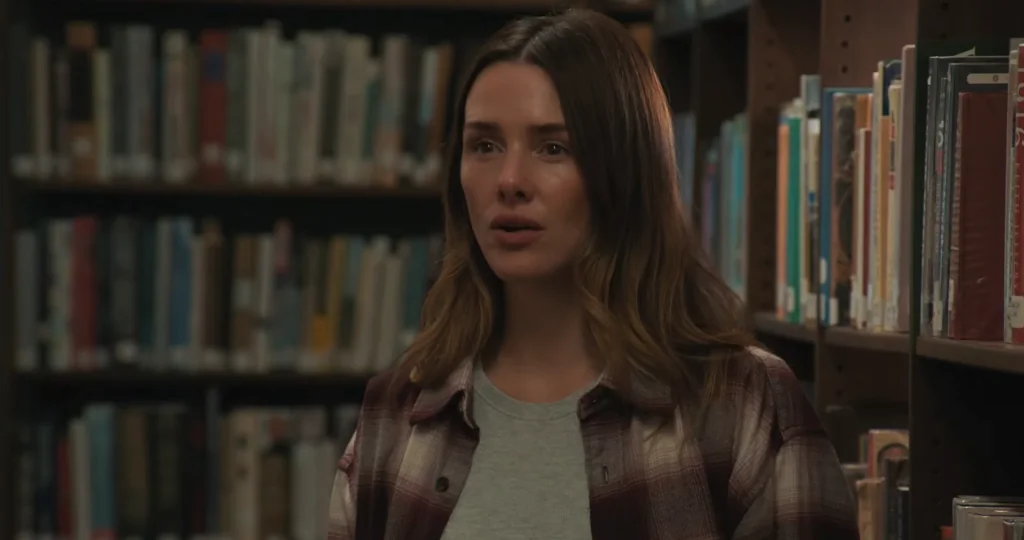
Something you do with Trauma that I really loved, in terms of bringing people back, is having Adam recognize Addison Timlin. For those who might not be familiar with these films, she played a different character in Depraved than she does in Blackout. The latter character carries over to this film. It’s such a small but bold choice to acknowledge in the narrative in a fun way.
I really love that you cite that moment, and that is why I put that little weird twist in. Addison is the only person who violates the entire agenda. What happened is that I'd worked with Addison on a movie called Like Me. We met and had a great time. I was a producer, but I also acted with her, so we had an intimate experience. Then she was in Depraved, and she stole the movie, and she called when I made the werewolf film, and she said, “Well, what about it? I hear you're casting someone my age. Excuse me. Why not the call?” I said, “Well, Addison, I would love for you, but you were in the movie, and we killed you, so I can't have you.” Then I hung up, and I was so regretful, and I thought, “What am I doing? I'm refusing Addison Timlin's advances.”
I had this inspiration. I said, “She'll be the bride of the monster in each movie.” So she's technically the bride of Frankenstein first. Then she's the bride of the Werewolf, a completely different character in Blackout. Then, I thought, “She'll be the bride of the monster in the next one too, and she'll be my bride.” So you could see the tortured, depraved mind of Larry Fessenden at work. Anyway, and then as you say, there's that funny moment, and I'm always so tickled when people get it, because it's also about perception and doppelgangers and all the other things that are really real. I don't violate that trick elsewhere.
I did want to circle back to something: you mentioned Emily Bennett and Toby Poser. They are both wonderful, exciting filmmakers, and in the old days, I'd be producing their movies, but the Adams Family needs no help. They're such kindred spirits, and so is Emily. It was just so nice to have them in both. They're perfect in their roles. They really elevate just their seven-second sequences. I just want to pay tribute to another generation of filmmakers putting out the work, and I hope we're all unified in our independence.
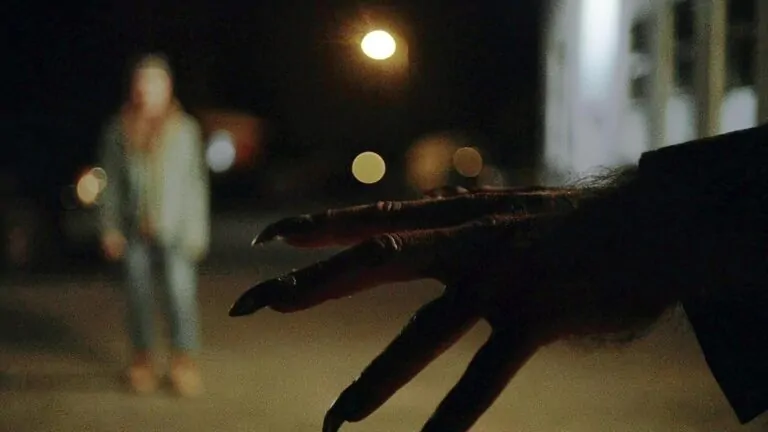
Emily is great. You recently acted with her in her incredible short, The Crying Man. My partner, Aimee Kuge, produced it, and she sent me these gorgeous shots of you standing in the blizzard during the shoot. I know you were literally against the elements with that one, but it came out as something breathtaking.
Every movie's difficult, but I love working with the weather. To me, making films is to engage with fate, which is to say the weather or the broken camera; these are the real challenges. Instead of becoming degraded or necessarily throwing money at it, although sometimes, if that's a solution, it's worth considering, you’ve got to think outside the box, especially at this level. So there was a blizzard, and we said, “Let's use it. Let's not cry inside, sipping our tea and waiting for the moment to pass. Let's go out into the breach.” I grew up loving Herzog, and of course he's always engaged in some existential struggle with nature and the jungle. Even his stars are a mess!
Going back to Trauma, I’m sure when you made Habit, you didn’t think, “Thirty years from now, I’m going to bring Sam back.” When did you start thinking about merging these films, though? Because Depraved stands on its own narratively. It isn’t until Blackout that you start connecting them, with Adam showing up at the end.
For that coda, I just thought, “Well, Adam, the Frankenstein character, has gone upstate again because he had his trauma there, and then he's rejected at the end of the movie, and I think he would seek some sort of refuge.” It's also a tribute to Mary Shelley. Frankenstein keeps going north. He ends up in the middle of nowhere in the Arctic. So that was the thing when I finished Depraved.
Then, when I decided to make a werewolf movie, I was already tiptoeing around the edges of this tribute to the monsterverse that Universal originated because they kept looking for a new way to make a buck. But then they created iconic characters like Frankenstein, Dracula, and The Wolf Man, and so on. It’s funny because Lugosi really only played Dracula once, but it’s so iconic. Abbott and Costello Meet Frankenstein is where they finally got the gang back together. Karloff wasn’t in it, but I think Glenn Strange is a cool Frankenstein. He’s the one most people recognize, and they don’t even realize it. He’s like your childhood Frankenstein.
I love that movie, except that I'm endlessly serious. A lot of people say that's their first monster movie, and I'm always like, “Well, grumble, grumble, grumble.” But I loved Abbott and Costello, so I was very happy with that. Anyway, somewhere along the lines when I was making Blackout, I would tease the actors and say, “Well, if you survive this movie, you have to be in the sequel.” And everybody would say, “Oh, kill me. Kill me now!” [laughs]
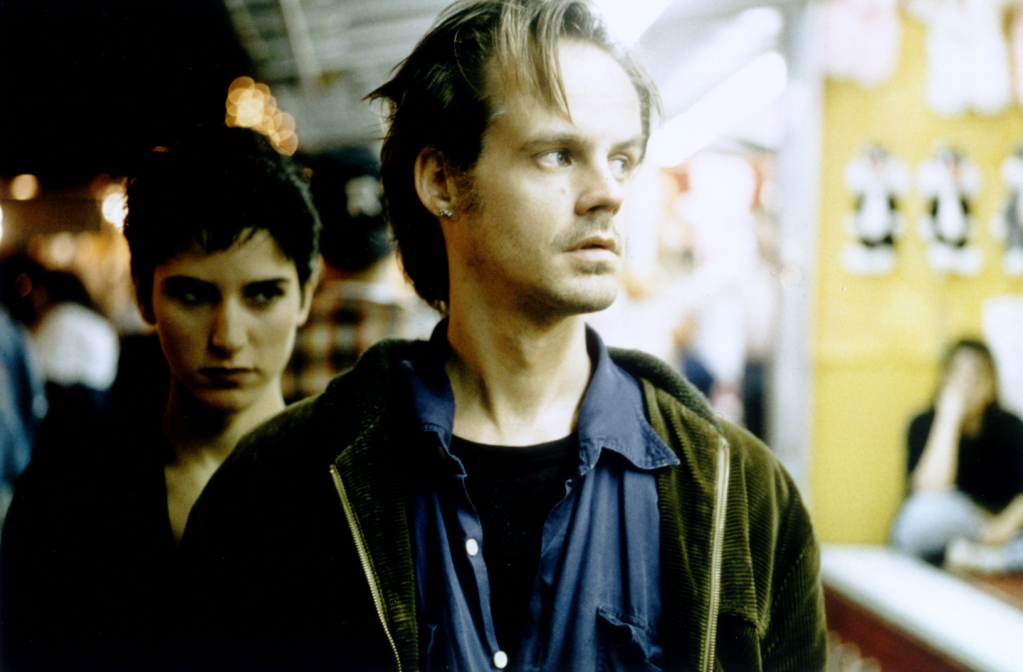
The way you bring in Sam, your character in Habit, is so interesting. We met him thirty years ago in grimy, ‘90s New York City, and here, he’s making his way upstate because he reads about monsters like himself. He’s looking for a community in a way. Tell me about that drift from the city to upstate.
My angle was to modernize these classic mythologies: the Wolf Man, Frankenstein, and the Vampire. Remember, I'm not the vampire in Habit; I am the victim. So those movies were sort of exploring the very similitude of these stories. I always say, “What would it really be like if you met a vampire, if you were a werewolf, if you woke up as Frankenstein?” That's how I start those movies. Then, when I contemplated making a sequel or a mashup, I thought, “Well, I'll take these monsters that we got to know in these singular movies, and I'll objectify them so somebody is looking at them and sort of reacting.” Then it became a movie about identity and how we see each other. If you met Frankenstein's character, that guy, what would you think?
That is where I came up with Cassandra: she had a pal, and they were sort of observing the monsters. In calling them out, you create the dilemma, which I think is very much what's going on in our country. I think, to answer your question, moving from the city- which I love shooting in; I love the grime of the city- also that always fits into the theme of loneliness and anonymity. Then when I made the werewolf film, it just naturally felt like it was going to be upstate, and I've lived there long enough to know there's political conflict there. One guy wants to develop the mountain to build a golf course, and that's going to affect the other thing, and the usual argument: it'll bring workers, and then back and forth. So I sort of seized on that.
Really, when you think about a werewolf, it's a divided character. By night, it's nocturnal, attacking; by day, regret, confusion, not being able to access those memories. That plays into alcoholism, but it also seemed to work as a small-town parable of what's happened to our country. Then when I decided to make the fourth film, I was just sort of stuck in that town because I liked what had happened and the implication that Frankenstein would've met the Wolf Man and they were living together, hiding out like small-town criminals.
What I thought was cool is that, because of the internet, Sam got wind of them, and he comes up to see: are they really monsters? I mean, you think about that guy's been a vampire for thirty years; it would be very lonely and strange. So he's like, “Are you serious? There's other monsters?” It was slightly whimsical, but I do want to say, I don't think it takes away from the strength of Habit, which is that it's ambiguous.
It's possible he never really met a vampire, and that he was just a drunk, filled with despair and lost. I think that remains a strong part of the vampire canon just because it took a specific, very personal angle. But I like Sam returning, and now we're sort of just buying into the fact that, okay, so well, maybe he did become a vampire, and then what happened to that personality? I think he's conflicted because he's sort of forced into the darkness.
My real thing with all of this is that he can't die, and I feel like if we don't have mortality, then morality seems kind of absurd, right? I still thought it was worth exploring that character. The irony is I still have the clothes, so I could just put enough little fun Easter eggs in there. If you know the movie Habit, you go, “That's crazy. That's the same jacket,” and so on. I was having a little bit of fun.
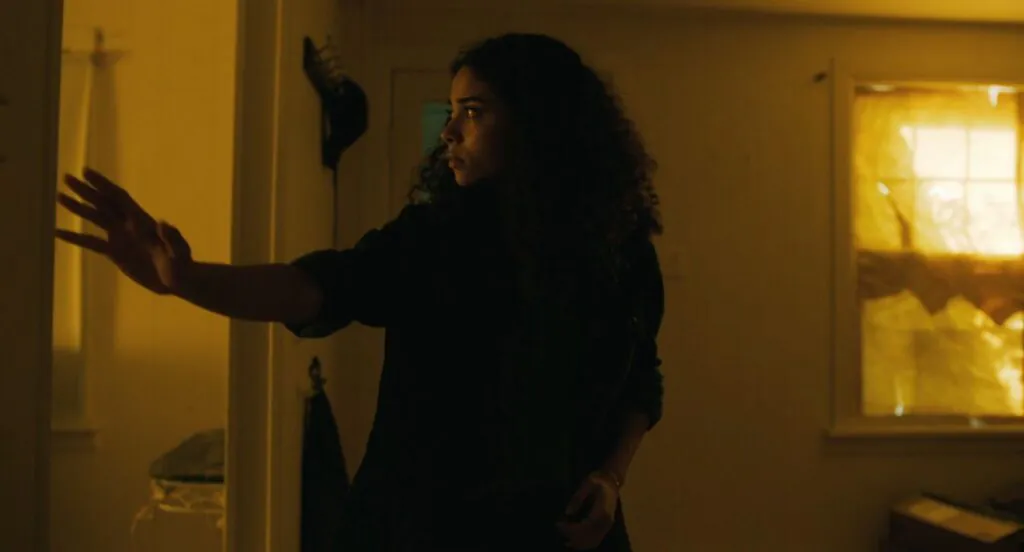
I like Cassandra’s character because she’s mixed and she’s queer, someone who would be othered by society, typically, and you have her be the one to do the same to the monsters. It’s like this repeating cycle.
Well, I just love that you observe that in the movie. That was the soup I was swimming in. That was what came to the surface of what the movie was about. I read some books by mixed-race folks, and I also know someone whose daughter is mixed-race, and she's in these college clubs, and they bicker over who's more aggrieved and so on. I really found that so profound, and I think it also reflects what we're now calling “Woke 1.0” or whatever. This infighting around who's more bereaved or victimized by society. Then there's the queer thing; even the gals, when they're kissing and finding comfort in each other, they're like, “Well, this isn't really me.”
Personally, I want to have a much more fluid society where we're not labeling each other, which is somewhat contrary to the current way of thinking, although things do keep changing. This is what informed the movie, and that's what happens when I'm making a film. I just get more and more drawn into what's in the news, and then I have weird preoccupations. I always liked George Washington Carver, but of course, he's defined as a Black scientist as opposed to just a scientist. I just find that the way society categorizes and then divides us based on those categories is all for the convenience of the capitalist system, which is oppressing all of us. So I feel this is all very important, and yet it can be in a monster movie because monsters are also important.
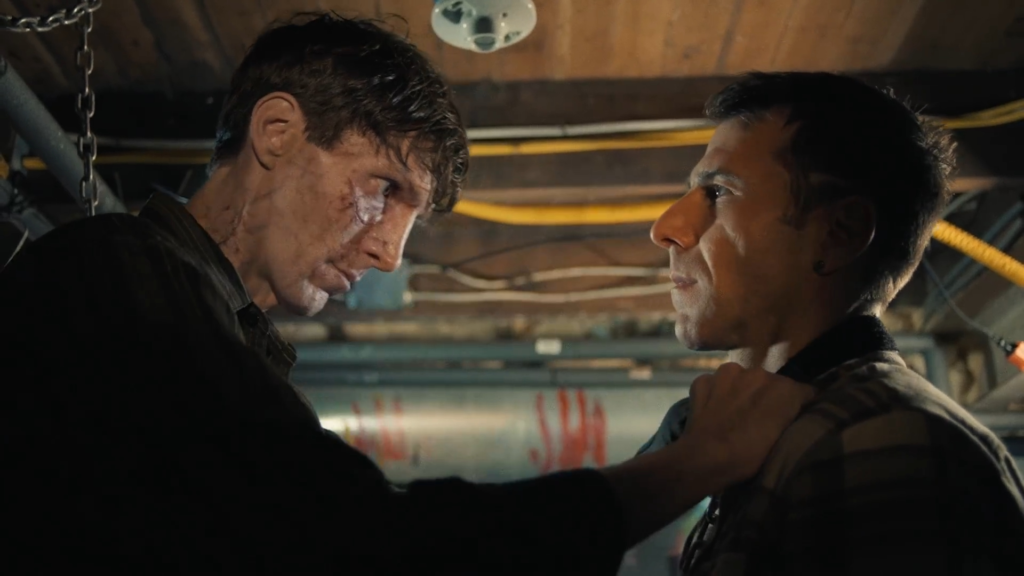
Tell me more about the monsters of it all because I think we’re also living in a time when horror has become much more about the metaphor than the horror itself. Horror has always been trauma, grief, and pain, but I think we’ve really fallen into this thing where it’s like, “Oh, but this movie? It’s really about trauma.” How do you find that balance yourself?
I really was influenced by the Universal movies, and remember, we're talking about something that is also aesthetic. It's the makeup by Jack Pierce, the choices they made. I marvel at it. To me, this is pop culture at its best, and there's plenty of other cool things that have been invented. I'm just drawn to the monsters. In my youth, and to this day, I collect all manner of little toys, and I don't consider them toys. [Larry holds up a Frankenstein action figure.] I'm looking at an image.
I mean, it's little, and it's perfect. It engages me. So it is an aesthetic thing. But then when I became a teenager, I was totally immersed in the '70s movies. As I say, there was a sort of psychological realism of De Niro and Pacino and Hoffman and Nicholson and that whole gang, and of course, before them, Brando. I just wanted to bring those two preoccupations together: the aesthetics of the monster story, which is always about the outsider, and the vitality of almost verité cinema.
As for Trauma, I named it Trauma because I agree. I think what happened is in the years of Babadook and It Follows, and I would argue my own films were teasing at this, the idea of revealing that horror has always been about real upsetting things, and then you sort of put a monster in as a metaphor for things that you might not want to talk about. There's certainly a great history of queer themes in horror movies that you can uncover. Now, my thing is that I want to remain in the metaphor. It's the way Hitchcock liked to keep his women dressed, but he's obviously obsessive. In the same way, I sort of like it when you use a metaphor to discuss very raw things; otherwise, you make a drama that's just upsetting.
I'd rather see a werewolf movie that implies those struggles, and then it opens up the implications, and people can relate to it from where they're coming from. I feel this is the great beauty of horror. Now, I think what you're asking is important because there was a trend in the opposite direction. For example, I never liked the Rob Zombie Halloween movies because they spent too long showing Michael being abused as a kid. I mean, it was almost half the movie. It’s like “I get it!” It's almost more interesting to just say, “Well, obviously, he's insane.” Imply some kind of repression, and then he turns into Michael, and you're off and running. I do believe in the subtext of horror movies, but when it becomes meta-text, maybe you lose something.
There is this quality, which I think is why we're in this problem in our culture: the finger-pointing aspect of the arts and politics creates a backlash. I would rather have a big warm hug between everybody rather than, “Ah, ah, ah, you've overstepped.” I think this is a dynamic in human relationships. People don't want to be told what to do. I don't!
I directly named it Trauma to say, “Yes, yes, it's about trauma.” But let's think about it differently, rather than saying, “Look, I'm going to show you that somebody's mother was mean to them.” I'm going to say, “There's a lot of regular town folk in my story that suffered from this werewolf thing, and a lot of them won't admit it was a werewolf.” I'm trying to depict the vibe of how we suppress things, how we won't admit things, how we always have to be correct, and just the real interaction of people together and scapegoating and all the things that have led to the great horrors of the world, and the little horrors, the little microaggressions. It's all in a fluid nightmare.
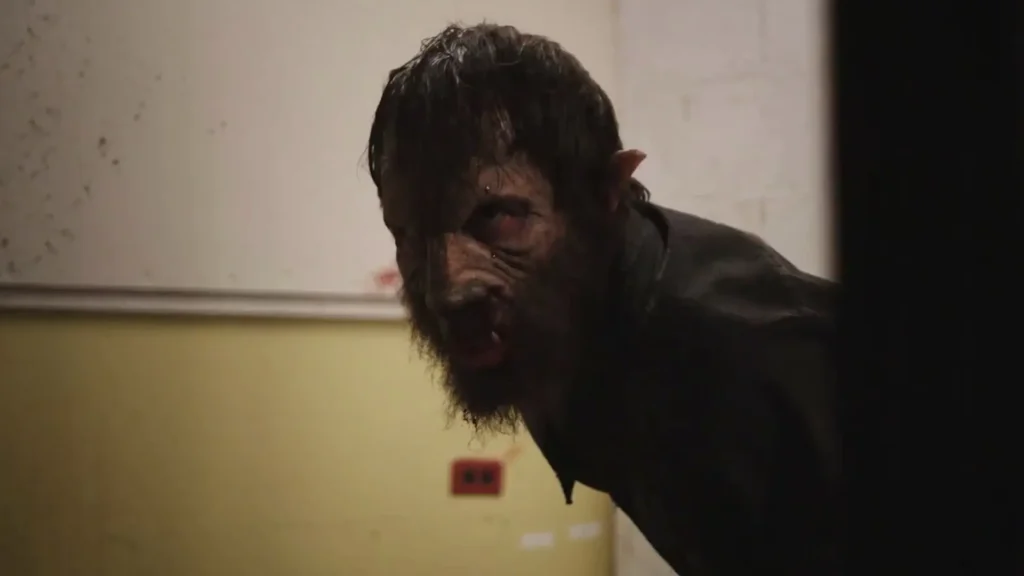
Art has always been a recurring theme in your work. I particularly like that in Blackout, you’ve made Charley, the werewolf, a painter. His self-portraits are so expressionist and smeared. You even mirror that in his transformation in Trauma. Where does that fascination come from?
Well, in Blackout, I made him a painter. It sort of bubbled up. In No Telling, I also have a painter, and then in Depraved, they look at the museum, the history of the arts. It's rather simple-minded, but I think there's a truth to it. That in the history of art, it used to be very representational. There was a sense of storytelling. Then, as you progress through the centuries, humanity unhooked from reverence for the outside world, from nature, and God was dead. Nietzsche said that. Then the human being became the centerpiece. I would argue that late 20th-century art became more abstract. One obsession I have in my movies is about narcissism and the human animal being obsessed with the idea that it's the greatest of all the animals, the smartest of all the animals. The degradation of the natural world represents to me a narcissism and an arrogance that is misplaced. Humans are not sustainable.
They're not going to last as long as the fucking dinosaurs did. We're going to kill ourselves with AI, which is the ultimate narcissism: the idea of superintelligence. You listen to intellectuals worrying about whether computers are sentient, and they still haven't resolved racism and animal abuse. It's like, “Are you fucking kidding me? You're now worrying about the feelings of a computer?” This is just deep narcissism. So my movies end up being about, “What is the matter with you people?” I mean us. That's what I believe. Habit is a self-critique, if nothing else. That guy is basically a victim of his indecision, self-pity, and all of that. When I point the finger, I'm also pointing it back at myself. Humans are dysfunctional, and it's very sad. It's sad to watch, and I want to make scary movies about it.
I like the idea of a painter because he’s already a little outside of society, as all artists are. The nice thing about Blackout is that he does a tour of all the people in the town because he knows he's going to kill himself that night. I like that you realize that everybody's like, “Oh, Charley, yeah, you're the artist.” Of course, he's been rejected, probably by his father and the other patriarch in the town. Mine are existential movies above all. I think they have more in common with a so-called independent movie than necessarily horror movies. I've always known I don’t satisfy some people with the kill count and the gore. At the same time, look, let one guy do what I do, and that's who I am. Everyone else can make real horror movies, and that's cool too.
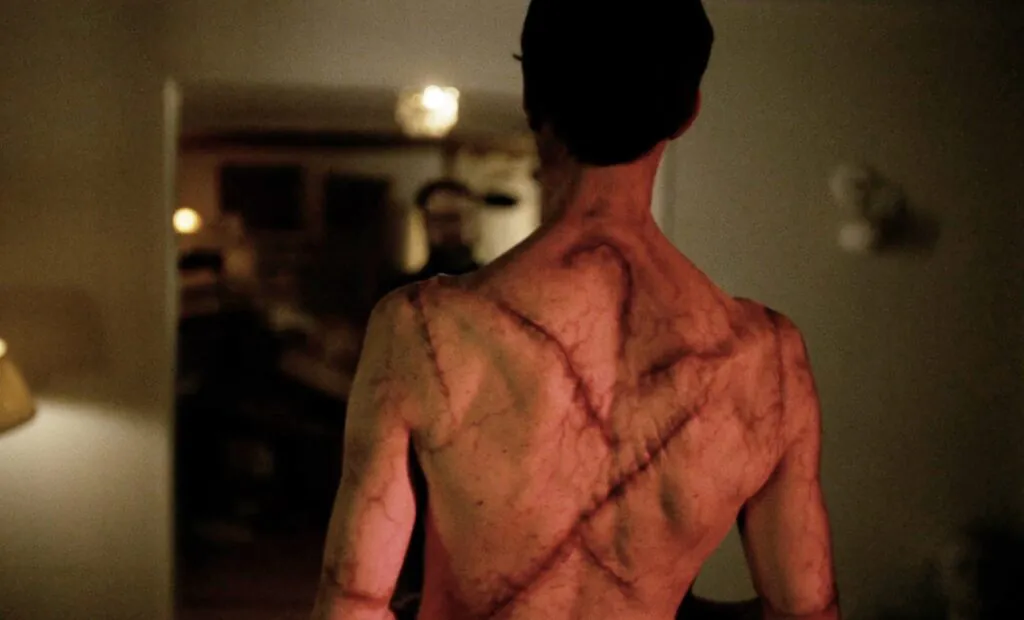
When I saw Trauma at Brooklyn Horror, you said a few times during the Q&A that you want out of making movies. I often ask independent filmmakers how they keep doing this in an increasingly unfriendly environment, but it sounds like you don’t want to. You laughed it off, but is there truth there?
I am trying to express a certain frustration. First of all, I've come to realize that people care about what I'm saying, but also there's a lot of filmmakers who say it's their last film and they keep going, and you're like, “Oh dude, why are you wasting our time with this emotion?” Tarantino, Soderbergh, even Miyazaki! I sort of regret bringing it up because it just seems to draw attention to me. I mean, who fucking cares is the bottom line. No one would care. More importantly, I think what I'm really doing is I'm expressing that it's fucking hard. It's hard to raise the money. You need to pay crews more because the run-and-gun aesthetic has faded with the capitalizing of everything. The culture has shifted, and one thing Trump has done is create a conversation that is always about finances and money.
This is a little bit of a hobbyhorse, but I want to bring it up. The way they responded to Digger really pisses the hell out of me. This is an original, badass movie. It's absolutely devastating. It has a really interesting structure, and it’s devastating in its purpose. Everybody is pitched at 120%, but I loved it. I thought Tom Cruise was amazing. The way they contemptuously dismissed the movie because the audience didn't go, and they just seemed to dance on the grave of ambitious filmmaking, really upset me. I’m not even speaking in defense of Digger, really, but just this sort of exhaustion with the culture. I'm like, “I can't keep doing this because I can barely pay back my investors and they know what they're getting into, but it's a little degrading.” That said, I feel celebrated by critics and thoughtful people like yourself. I'm not complaining about my lot in life, but it's tough.
I made two movies in a row because I knew I had to get everybody back. I made Blackout, and the next day I was figuring out how to make Trauma. So I think I'm just saying I'm a little tired, and there's other things in life. I like reflecting on the journey because I want to leave a legacy not of myself, but of a little generation of filmmakers who worked together and put that out as something that happened and was cool. On the margins, we're A24 or Neon. Those are success stories, but Glass Eye had its place, and I want to celebrate that. I don't know, we'll see. I'll probably be making a movie in a month, and that'll be the conversation in the next round of articles. [laughs]
