
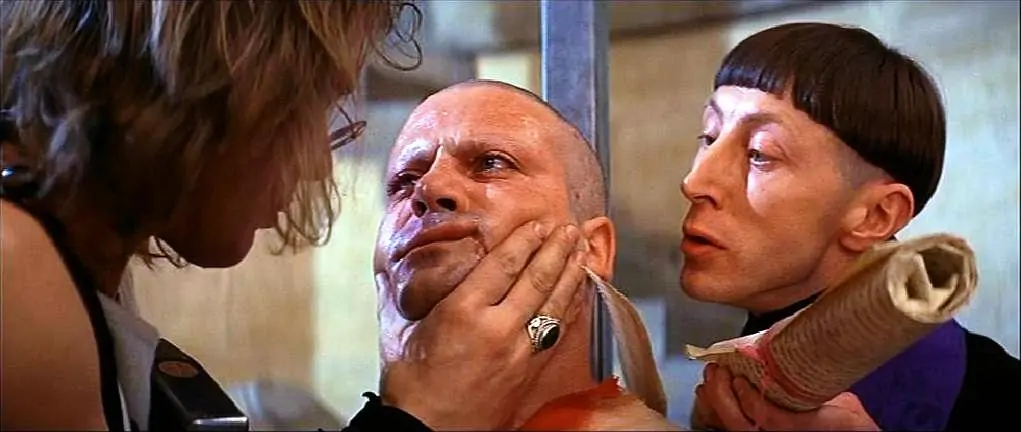
We’re used to covering forbidden films at FANGORIA, and generally speaking, it’s how we stay in business. Some taboos are left to personal taste while others are just too naughty for polite society as a whole, but what makes a film too scandalous for even the most niche degenerate’s consumption? Today we are shining a light on the most infamous reel at Warner Bros. HQ with a guide to what made the fabled Director’s Cut of Ken Russell’s The Devils so unmarketable–until now.
On May 5, 2026 the news broke that Warner Bros. Clockwork, the new specialty label run by former NEON Chief Marketing Officer Christian Parkes, has restored Russell’s cut to 4K standards for a premiere at this year’s Cannes Film Festival in what will also be the label’s first repertory release. Upon announcement, the fan conversation immediately shifted to questions of when a physical copy would finally find its way into our debaucherous little paws, and while that remains unannounced, a theatrical run has been slated for mid-October.
The 1971 film starring Oliver Reed and Vanessa Redgrave has been more widely accessible of late, thanks to Shudder’s recent programming. A keen eye, however, will notice Clockwork’s announcement touts six to nine additional minutes (depending on which other versions you may have previously encountered).
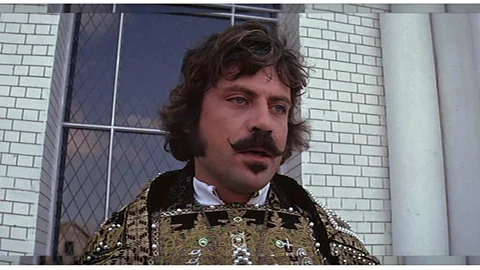
If you’re wholly new to the film, the plot of The Devils and its source material is a dramatization of the aftermath of the supposed possessions of Loudun, France. At the center of the incident is the ill-fated Father Urbain Grandier (Reed), a 17th-century Roman Catholic priest accused of witchcraft by way of enchanting a convent of nuns into a state of sexual hysteria. Behind the accusations is Sister Jeanne (Redgrave), the sexually repressed nun whose lustful obsession with Urbaine sets the accusations in motion. Russell’s cinematic interpretation could have single-handedly led to the satanic panic of the ’80s were there not droves of wonderful though less artful films to assist in filling the Video Nasty docket.
In adapting Aldous Huxley’s 1952 novel The Devils of Loudun, itself based on true events, Russell presents a baroque tale of Catholicism, occultism, obsession, and politics in 17th century France. Still, anyone familiar with even one of Russell’s deliriously decadent films shouldn’t be surprised to see that the deviance depicted by the then-devout Catholic director reaches libertine extremes with an added dash of Satanism. In his autobiography Altered States, Russell would later declare The Devils “the last nail in the coffin of [his] Catholic Faith,” stating The Devils was his one truly political film, mostly in its exploration of state sanctioned brainwashing throughout history.
“Lusty nuns, and graphic torture, and psychosexual violence, oh my!” would be an appropriate tagline for the film that also boasts a longstanding critical argument for pro-spiritual themes amidst the oppression of organized religion. Despite its thematic woes, the movie is widely praised for its cinematic efforts including some of the most opulent sterility ever put to film thanks to the collaboration of cinematographer David Watkin and production designer Derek Jarman, the latter of whom created the film’s iconic and deceptively decadent white-tiled nunnery, a secret homage to public toilets plucked directly from the Huxley source material.
Spoilers Ahead
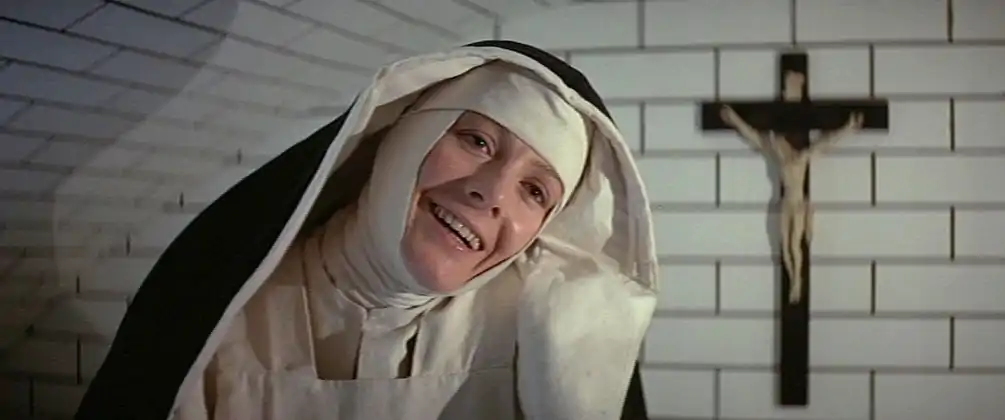
In a film brimming with lewd indulgences, two scenes struck a nerve with the British Board of Film Censors. The more widely discussed sequence of the two scenes–now MIA for decades outside of one-off arthouse screenings–is referred to, most often in a whisper, as “The Rape of Christ.” What exactly is it though? To be clear, no real Christs were harmed in the making of this scene; it merely features a statue of ol' JHC. What's depicted is the aforementioned carnally-charged nuns engaging in a pleasurable group activity with a large, crucified effigy while a, um, manually occupied priest supervises.
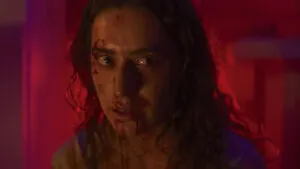
Though the subject matter is undeniably inflammatory, the messaging is ambiguous. This scene, as well as the acrobatically amorous nuns in general, represent a faction of Christianity anguished by their distance from the teachings of their sacrificial lamb, all while undergoing a viciously disciplinarian lifestyle in his name.
Way back in 1971 John Trevelyan, the surprisingly divisive Secretary of the British Board of Film Censors, faced his peers to say that while the film was deeply mired with troubling imagery, it had merit artistically and even served a potential defense of religion. According to the British Film Institute, Trevelyan’s main justification of the film was the locus of its profanity, Oliver Reed’s spiritually masochistic Father Urbain. Trevelyan contested that lesser forms of violence experienced by Reed’s character would have failed to portray a man of God’s dedication to his savior.
Depending on your affiliation, and further, your particular denomination within Christianity, it will either be a shock or unsurprising entirely that the fellow Catholics of the board including then BBFC president Lord Harlech were in support of Trevelyan’s particular stance and the film overall. Of course, they did request the removal of the aforementioned assault of Christ, feeling that the metaphor might be lost by the general public amidst the sensationalism.
Arguably less discussed for its spoiler potential, it’s also noteworthy that Vanessa Redgrave’s Sister Jeanne fornicating with a femur does not roll off the tongue in mixed company (or any company at all, really). And so it also faced the chopping block. And still, when all the trimming was done and this more palatable version landed on the desk of the British Board of Film Censors for general review, an additional 89 seconds of cutting was further requested just to receive a certified ‘X’ rating in the UK.
Critics loathed the release, national and local authorities banned it, and even Trevelyan’s successor who had nothing to do with the release had his career threatened. The creatively suppressive edits of the full film became the Stations of the Cross in film education for cinephiles immersing themselves in Ken Russell’s greater canon. Consuming Tommy, Lisztomania, The Lair of the White Worm, Altered States, and onward is to experience the equivalent of a hallucinogenic trip, and to know them is to crave more.
After their removal, all that remained of “The Rape of Christ” and Redgrave’s bone-a-thon were detailed descriptions in John Baxter’s 1973 biography of Russell titled An Appalling Talent. Rumors led forlorn filmlovers to believe the deleted scenes had been lost forever. Nearly 31 years later, film critic Mark Kermode and documentary filmmaker Paul Joyce dug up the reels from the bowels of the Warner Brothers vault. With the film’s original editor and frequent Russell collaborator Michael Bradsell assisting them, plus a thumbs-up from Russell himself, the film was said to be fully restored to its original form. It screened at London’s National Film Theater in November of 2004, 33 years after its initial completion.
Despite a successful British theatrical tour of the film with Russell in tow and a lengthy list of notable filmmakers rallying against its censorship, Warner Brothers refused to release the full film. This week’s news is immense: this longstanding suppression of the arts will finally see a full reversal and release by the end of 2026.
Ken Russell's The Devils is, as these archaically taboo films often are, less controversial to see than it is to hear about by today’s standards, but Russell was no less committed to his bit when he oversaw the creation of this director’s cut finalized in 2004. It’s fleshy, it’s violent, and above all else, it is beautiful–just the way we like our Russell films.
We recommend seeing it with a crowd of likeminded or otherwise consenting individuals in a dark theater come October. If you’re holding out for the private viewing experience of that unconfirmed physical release, then Fango, good neighbors that we are, must suggest you close your curtains and put the children to bed when that glorious day finally arrives.