
Last Updated on July 14, 2024 by FANGORIA Staff
Hollywood’s gonna Hollywood—and sometimes that means looking at the gruesome, pervy, or just plain depressing ending of a to-be-adapted horror novel and asking the $64,000 question: “What if we made this happy?” Or, if not happy, at least more palatable to a general audience, even if that general audience has paid to see a horror movie. Sigh. Here are ten horror movies that took their source material’s ending and threw it out with the bathwater, for better or worse. (OK, for “it’s a little less dark, but I understand the reasoning” or “what in the hell did you do?”)
The Bad Seed
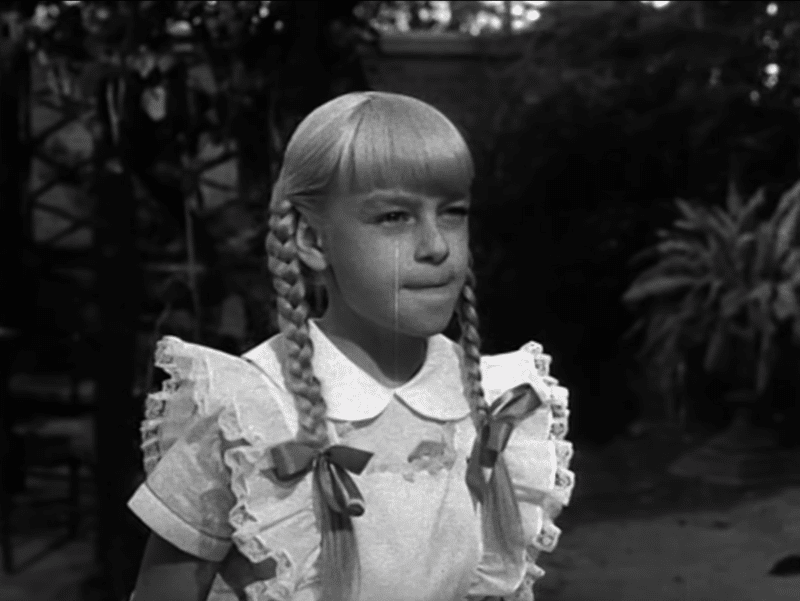
In the character of eight-year-old Rhonda Penmark (Patty McCormack), 1956’s The Bad Seed gave us one of the earliest—and best—entries in the Killer Kid sub-genre. “Best,” that is, right up until the last scene, when the brewing conflict between angelic, smart, multiple murderess pre-teen Rhoda and her increasingly suspicious mother Christine (Nancy Kelly) comes to a head…. with Rhoda getting struck and killed by a lightning bolt. Bam. Problem solved. Good on ya, God, for the last-minute play, I guess.
The original book, written by William March, ended in a much more downbeat and morally complex way. Christine gives her daughter an overdose of sleeping pills and then commits suicide, destroying all the evidence of Rhonda’s homicidal tendencies beforehand so no one need know of her family’s shame. A serviceable plan for the put-upon movie matriarch, except a neighbor finds an unconscious Rhoda soon enough for her life to be saved, leaving her free to kill again with no one the wiser.
The Devil’s Advocate
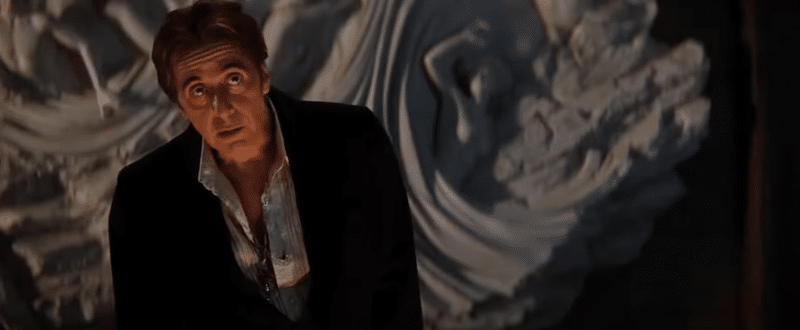
The film version of The Devil’s Advocate goes for a punk-out ending, segueing from an epic fifteen minutes of “John Milton” (aka Satan), played by Al Pacino, going absolutely ham on main character Kevin (Keanu Reeves)…. to a flashback to the beginning of the movie, revealing that—whaddayaknow—Kevin’s seduction to the dark side was actually a dream. A premonition. An alternate reality. Something. The movie ends with everything hunky-dory for Keanu Reeves, except that Satan’s going to keep trying to seduce him, because he’s Keanu and who doesn’t like Keanu?
Andrew Neiderman’s book doesn’t have the raw, savage WTF-ery of Al Pacino’s scene-chewing, but it does make a lot more sense. In the book, Kevin figures out pretty early on that there are some supernatural shenanigans afoot with Milton and, with the help of two book-exclusive characters, comes up with a test (ARE YOU SATAN?: pink line for yes, blue line for no) that ends up killing him. Except, of course, Milton isn’t really dead: it was all a ruse to land Kevin in prison, where—under the direction of (guess who?) Milton, who’s adopted the guise of a prisoner—he can use his legal knowledge to help assorted rapists and murderers get out on appeal.
Pin
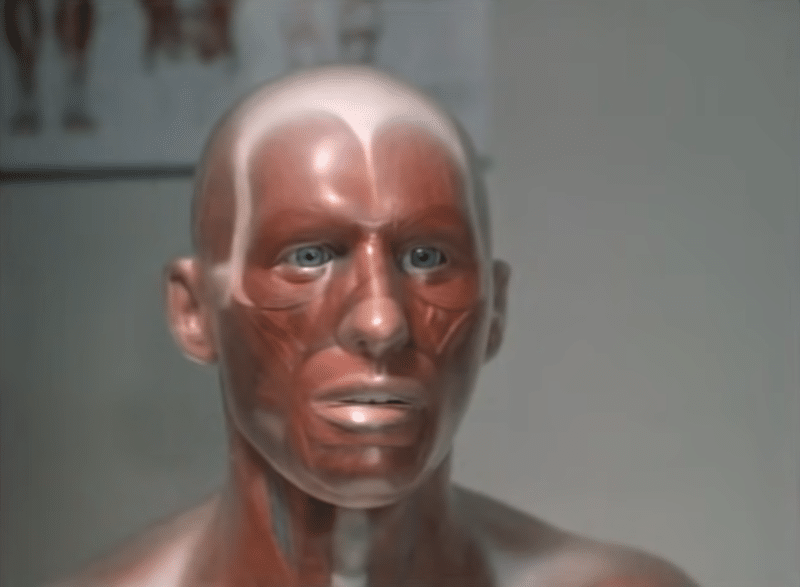
About a decade before The Devil’s Advocate came out, another one of Andrew Neiderman’s books, Pin, was adapted for the big screen by Canadian director Sandor Stern. As was not the case with The Devil’s Advocate, book and movie hew pretty closely together here, at least until the last few minutes. An already mentally fragile teenage boy, Leon (David Hewlett), is left even more psychologically adrift when his parents die in a car crash, leaving him increasingly obsessed with his one friend: Pin, his late father’s anatomy doll, whom Leon is convinced is alive.
![The EVENT HORIZON Sequel Is ALIENS In Hell [Exclusive]](https://www.fangoria.com/wp-content/webp-express/webp-images/doc-root/wp-content/uploads/2026/03/EventHorizon-Inferno-CoverRBG-Cropped-2-300x169.jpg.webp)
One way the movie is different from the book is that it way downplays Leon’s psychosexual obsession with his twin sister, Ursula. (Neiderman went on to ghostwrite for Flowers in the Attic author V.C. Andrews after she passed. Go figure.) In the movie, Leon tries to kill Ursula’s boyfriend, Stan, and Ursula retaliates by chopping up Pin with an axe. Leon snaps and essentially turns into Pin, trapped inside his own body and unable to move or speak. In the final scene, long-suffering Ursula finally gets her happy ending: A nurse is taking care of Leon, leaving Ursula free to go on vacations with Stan (he’s alive!) and, I dunno, blow-dry her hair, which I assume is what ‘80s horror heroines spent half their time doing. In the book (you’ll never see this one coming), Leon does kill Stan and, once Ursula chops up Pin, goes into a catatonic state; it’s an enraged, traumatized Ursula who’s key in Leon’s transformation into Pin, essentially as punishment. The epilogue shows us that, far from escaping her brother and living her life, a not-entirely-sane Ursula is now Leon’s caretaker, treating him like Pin and occasionally behaving sexually towards him.
Mr. Sardonicus
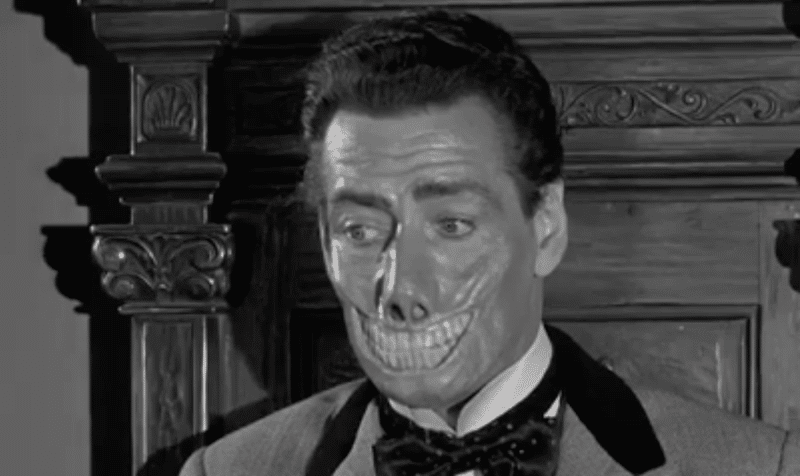
The William Castle classic Mr. Sardonicus is based on the novella Sardonicus by Ray Russell, who adapted his own story for the screen. The film, directed by famous schtick-master William Castle, famously polls its audience to decide whether the evil Sardonicus—who ends the movie unable to open his mouth, thus doomed to starvation—deserves punishment or mercy. The punishment ending is assumed, but in the novella, we’re actually told what happens to Sardonicus: he does in fact, starve to death, but not before his servants abandon him, leaving him to wander the countryside “livid and emaciated, his mind shattered, mutely imploring the succor of even the lowliest beggars…. Cursed by Lucifer, they say, he thirsted and starved in the midst of plenty, surrounded by kegs of drink and tables full of the choicest viands, suffering the tortures of Tantalus, until he finally died.”
Not that Sardoincus didn’t deserve it; he really was a son of a bitch. In another change, the movie has Sardonicus secure the main character’s help by threatening to facially disfigure Sardonicus’ own wife, whom the main character loves. In the novella, the wife is threatened with rape, “and not for one fleeting hour, but every day and every night of her life, whensoever I say, in whatsoever manner I choose to express my conjugal privilege!…. I am by nature imaginative.” Yeah. Kill ‘im.
Mother’s Boys
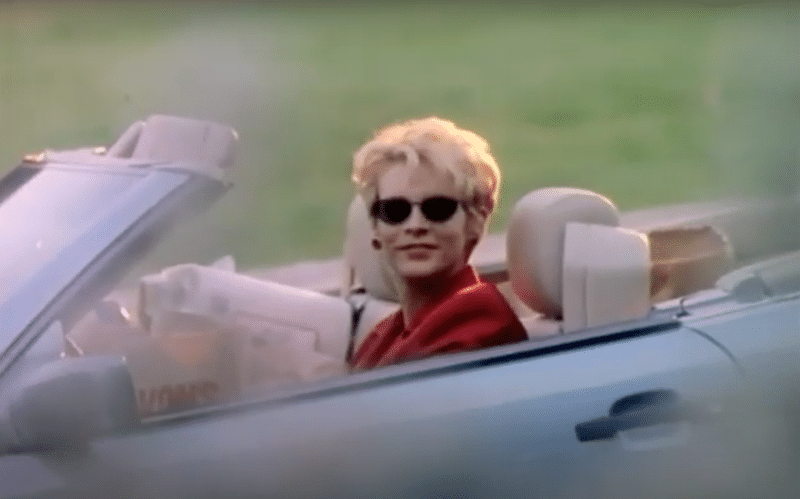
The Bad Seed may be about a sociopathic child vs. a sociopathic mother, but they have in common bogus endings that sweep away the impact of their source books’ original endings by up and killing their main antagonists. Mother’s Boys, co-starring Jamie Lee Curtis as a woman determined to get back into her estranged family’s life, by hook or by crook, has an ending that’s at least less galling than The Bad Seed literally having its baddie struck down by lightning: Jude (Curtis) dies accidentally after unsuccessfully trying to get her two young kids to kill Dad’s new girlfriend.
The book, by Bernard Taylor, has a bigger—and a different—body count, leading to a whopper of an ending. Here, there are three boys, plus an eight-year-old sister, Daisy. Daisy tries to rescue her father’s tied-up girlfriend from her brothers, the oldest of whom—ringleader Kester–retaliates and accidentally kills her. Kester then kills the girlfriend with an axe, and the boys bury her body. Dad comes home and finds out what happened, prompting the normally sensitive, nine-year-old Ben—terrified of going to jail and being separated from his brothers—to murder him with an axe. The boys are ready to go live with their beloved mother… who, in a coup de grace, has gotten over her whole “loving mother” phase and no longer wants to see her kids. The book ends with the three young boys—murderers, now—rejected and alone.
Carrie
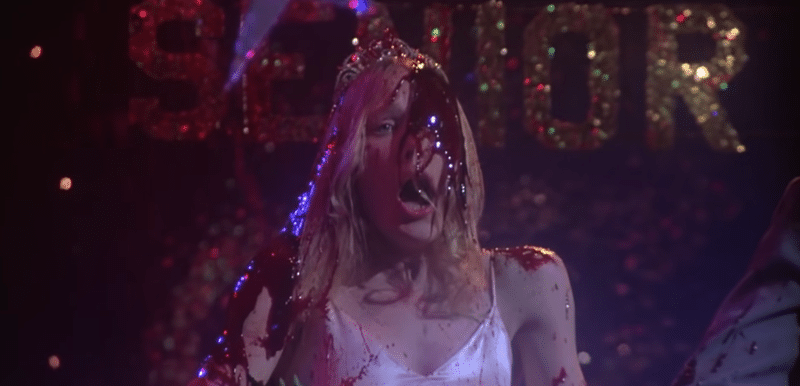
The ending of Carrie is less defanged in Brian De Palma’s film adaptation than stripped down—the film ending, in which Carrie White kills her mother and sets her house on fire, resulting in her own death, isn’t exactly happy-go-lucky. One has to imagine that alterations to King’s original source material are less about wanting to shy away from gruesome material than an issue of budget. It would have cost a lot of clams to do justice to Book Carrie’s night-long murder spree, where she departs the prom and proceeds to go hog-wild on the town of Chamberlain, setting fires and igniting explosions a’plenty, killing hundreds of people before dying of a fatal wound inflicted by her now-dead mother.
Cujo
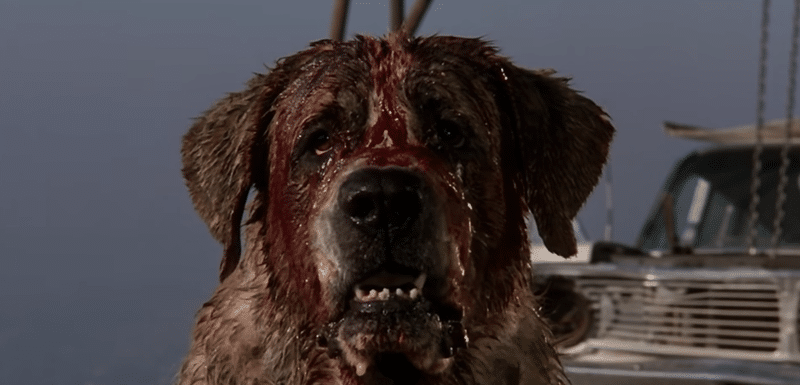
Cujo is about much more than a killer St. Bernard. In his depiction of two families caught in Cujo’s orbit—the blue-collar Cambers, who own Cujo, and the middle-class Trenton family, who he terrorizes—King paints a disquieting portrait of the male ego and the position of the man in protecting and providing for (or failing to protect and provide for) his family. Abusive Joe Camber is the “beast” who makes his wife and child’s life hell, while Vic Trenton—flailing professionally and in his marriage—is out of town when his wife and young child are trapped in a broken-down car with a bloodthirsty, rabid dog right outside the door. It’s a pretty big change to King’s story, then, not just the text but the meaning, that in the original book, the kid actually dies, succumbing to dehydration and sunstroke right before he and his mother would have been rescued. The Hollywood version of Cujo has a, well, Hollywood ending, with Donna Trenton getting her son to the safety of the nearby house and managing to revive him before Vic shows up, reuniting the happy nuclear family.
Thinner
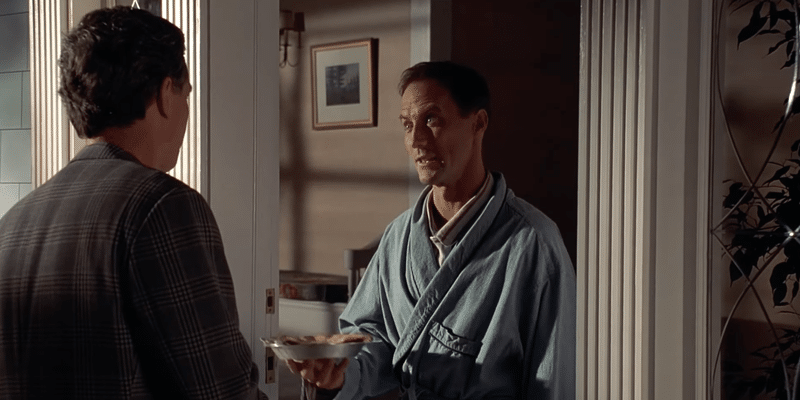
Hey, there have been a lot of Stephen King adaptations; there are going to be a lot of changed movie endings. Whether the ending of the movie version of Thriller is “defanged” depends on your point of view. Both versions of Thinner wrap up with small-town attorney Billy Halleck cured of the curse that was causing him to rapidly waste away, on one condition; the curse has been transferred to a pie, which someone else must eat, or the curse will bounce back on him. In both the movie and the novel, Billy successfully lures his wife into eating the pie, only to discover that her beloved daughter has eaten a slice, too. Book Billy decides to eat a slice himself, following his family into death. There, the novel ends. In the movie, Billy is about to eat a slice but is interrupted by a family friend with whom he believes his wife was having an affair; rather than commit suicide, he invites the man in for a slice of pie. Remorseful man kills himself vs. remorseful man, spurred by vengeance, does a heel turn, and tallies another notch on the murder belt… it’s a point-of-view thing as to which is more grim. If the movie version of Thinner does have a darker ending than its source material, it’s not exactly the only King-based movie to fit that criteria.
Deadly Friend
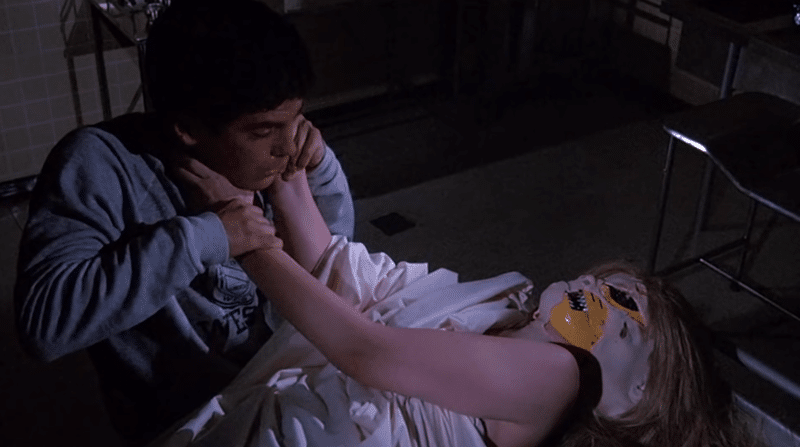
1986’s Deadly Friend is mostly known for the scene where Kristy Swanson throws a basketball at Anne Ramsey’s head, causing it to explode into a splatter of bright red goo. A classic scene! One, though, that didn’t appear in Diana Henstell’s book, which is overall much more downbeat than its adaptation. (Hard not to be…. see: “exploding head”) At the end of the movie, teenage-girl-turned-killer-robot Sam (Swanson) kills her friend/creator Paul (Matthew Laborteaux) by snapping his neck. In the book, Paul manages to defeat Sam by throwing her into a freezing river. Immediately afterward, wracked with guilt and grief over what has become of the girl he loves, he commits suicide by jumping into the river himself as his horrified father looks on. (The book ends thusly: “Then, in one soaring swoop, he flew out after her through empty space and thought with blinding clarity as he fell: So this is what love comes to.”)
To make it even more depressing: In the movie, Sam and Paul are in their mid-teens, and Laborteaux, at least, looks a good few years older than his character’s supposed to be. In the book, Sam and Paul are twelve and thirteen, respectively, when they die.
I Am Legend
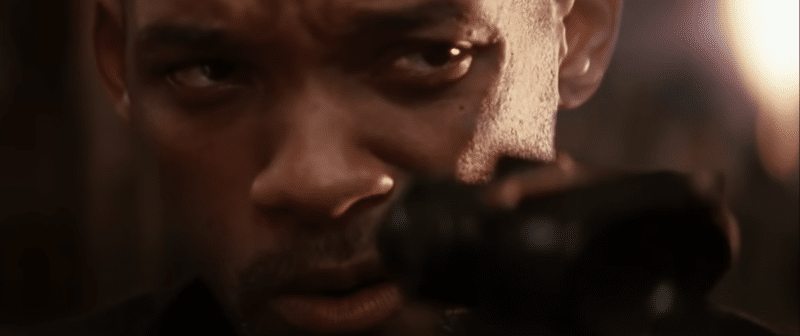
The 2007 film version of I Am Legend didn’t change the ending of Richard Matheson’s original novel so much as changed the whole damn thing, rendering the two more or less entirely different except for the basics. (The most fundamental difference between the two is that the book is excellent and the movie is not.) It’s in the ending, however, that the adaptation turns most egregious. In both versions, Robert Neville is—as far as he knows—the last human being alive on earth following the outbreak of a vampire apocalypse. Book Robert does scientific experiments to try and discover the cause of the disease, while Movie Robert (Will Smith) is busy at work trying to develop a cure. He’s successful in finding not only a cure but two human survivors, who are able to spirit the cure away to a military base following Robert’s heroic—legendary—sacrifice of his own life.
So: Robert’s a legend because he saved humankind. In the book… nah. The infecteds, he finds out, have evolved to the point where they’ve developed a medicine that can alleviate some of their symptoms, allowing them to begin the process of creating a new society. He’s a legend to the vampires because he’s killed so many of them—a kind of boogeyman, a monster-under-the-bed to this newborn species whom he thought of as irredeemably monstrous. He’s a relic… the last relic, in fact, of humanity, after he kills himself with suicide pills rather than face public execution. In the movie, humankind is saved. In the book, humankind dies.